Buying a used car is one of the biggest purchases most people make, and the gap between a good buy and a bad one is almost always about preparation. Nearly 7.8 million used cars changed hands in the UK in 2025, but used-car complaints to The Motor Ombudsman rose 14% in the same year, reaching 18,570 cases. The most common causes were customer service failures and engine or component problems.
Most of those disputes were avoidable. This guide walks you through the process from working out what car you actually need, through to what to check before you hand over any money.
Start With the Right Car, Not the Best Deal
The most common mistake used car buyers make is starting with a specific car or deal, then working backwards to justify it. Before you search listings, spend time on what the car needs to do for you.
Ask yourself how you actually use a car day to day. Is most of your driving urban, motorway, or a mix? Do you need to carry children, a dog, or large items regularly? Does your parking spot have room for a full-sized SUV? Will you ever tow? These questions narrow your choice to a realistic shortlist before price or condition enters the picture.
Getting this right also has real financial consequences. A diesel bought for urban commuting can develop a blocked diesel particulate filter (DPF) because short stop-start journeys do not allow the filter to regenerate properly. A large hybrid might look efficient on paper but cost more to service than its fuel savings justify for low-mileage drivers. The wrong car shape or powertrain is not fixed by a good price.
Petrol, Diesel, Hybrid, or Electric?
If you drive mostly short urban journeys under 10 miles, petrol is usually the lower-risk choice. Diesels are better suited to regular motorway or dual-carriageway driving where they can run at temperature.
Used EVs deserve serious consideration. A peer-reviewed study using nearly 300 million GB MOT tests found that battery electric vehicles had an average lifespan of 18.4 years, comparable to petrol at 18.7 years and longer than diesel at 16.8 years. Battery health in used EVs is generally better than public perception suggests: a 2025 UK battery performance analysis covering over 8,000 health assessments found average battery state of health at 95.15% of capacity compared to new. Used EV prices have also fallen sharply, with prices for the top 20 most searched EVs and hybrids dropping 10% year-on-year in Q1 2025 to an average of around £18,973.
The specific thing to check with a used EV is the remaining battery warranty and whether the seller can provide a battery health report from a diagnostic tool. That one number tells you far more than visual inspection ever could.
Emissions Zones and Road Tax
If you are in or near London, any car you consider needs to be checked against ULEZ compliance before you view it. Non-compliant vehicles face a daily charge of £12.50, which adds up to over £4,500 a year if you drive daily. Most cars registered from 2015 onwards meet the standard, but checking the specific registration on the TfL website takes seconds and can immediately rule out an otherwise attractive car.
Work Out Your Real Budget
The purchase price is only part of what a used car costs you. Before you set a ceiling on what you will spend on the car itself, build a full picture of what ownership will cost.
Insurance is one of the biggest variables. The average motor premium in 2024 was £622, but that figure shifts significantly based on car group, your age, your postcode, and your driving history. Getting quotes before you commit to a specific model can change your decision. Some cars sit in much higher insurance groups than similarly priced alternatives.
Annual servicing, road tax, and likely maintenance costs all vary by model. A quick look at owner forums and servicing guides for your shortlisted cars gives you a realistic sense of what upkeep costs year on year. Factor in fuel costs based on how many miles you drive, and compare that between your shortlisted options using real-world MPG figures rather than manufacturer estimates.
Research the Model Before You View Any Car
Once you have a shortlist of models that suit your needs and budget, look up the known issues for each before you book any viewings. Generic checklists help you inspect a car's current condition, but they cannot tell you whether a particular model-year has a known weakness in its engine, gearbox, or electronics.
Which?'s reliability survey covers data from over 63,000 car owners and is one of the best UK sources for this. Owner forums and dedicated marque communities are also useful, especially for known faults that only appear at higher mileages. You are looking for patterns, not single complaints.
When you identify a model's known weak points, you can look for evidence of those specific things when you view the car. A car that has had the known expensive repair done is often a better buy than one that has not had it yet.
Where to Buy
Each buying route carries different levels of protection and risk.
Buying from a franchised or independent dealer gives you the strongest legal position under the Consumer Rights Act 2015. If a fault emerges within 30 days, you can reject the car for a full refund. Within six months, the dealer must repair or replace the car, and the burden is on them to prove the fault was not present at sale. Approved-used schemes from manufacturers also include inspection standards and often extended warranties.
Buying privately is typically cheaper, but your legal rights are reduced to "as described" under the Sale of Goods Act. There is no rejection period in the same sense. You take on more responsibility for the inspection, and if something goes wrong, recovery is harder.
Auctions offer the lowest prices but almost no recourse. They are better suited to buyers who can accurately assess a car's condition themselves or who are buying for parts.
Whatever route you choose, verify the seller. For a private sale, the name on the V5C logbook should match the person you are dealing with, and you should view the car at their home address, not a neutral location. For dealers, check they are registered with a trade body such as the RMIF or the Motor Ombudsman, which gives you access to a formal dispute process.
Run the History Checks First
Before you book a viewing, run the basic checks online. They cost very little and can immediately tell you whether a car is worth your time.
The free GOV.UK MOT history checker shows every MOT test result, the mileage recorded at each test, any advisories, and the reasons for failures. Look for a consistent mileage progression. If mileage appears to drop between tests or stalls suspiciously, that is a serious red flag. The MOT history may also flag if a vehicle has been subject to a manufacturer safety recall.
A paid vehicle history check (HPI or similar) is worth buying before any viewing. It checks whether the car has outstanding finance, whether it has been written off, whether it has been reported stolen, and whether the registration matches DVLA records. Outstanding finance is one of the most common problems. If the previous owner used the car as security for a loan and has not repaid it, the lender can legally repossess the car from you even after you have bought it.
Insurance write-off categories matter too. A Category S or N write-off has been structurally or non-structurally damaged but can be returned to the road after repairs. Category A and B write-offs cannot legally be driven again. A Cat S or N car is not automatically a bad buy, but the price should reflect the history, and you need evidence that the repair was done properly.
Also check the recall status on GOV.UK's free recall checker. If the car has an outstanding safety recall, the manufacturer is required to fix it at no cost to you. Knowing about it before you buy means you can either factor it in or use it as a negotiating point.
Viewing the Car
View cars in daylight. Poor lighting hides bodywork defects and makes it harder to read the condition of paintwork accurately. Rain does the same. If a seller is only available in the evening or pushes to meet somewhere other than their home address, that is a reason to be cautious.
The Exterior
Walk the full perimeter slowly. You are looking for uneven panel gaps, paint colour mismatches between panels, and any evidence of filler (which feels slightly different under your palm compared to metal, and can show ripples at certain angles). Mismatched panels or overspray inside door jambs suggests the car has been in an accident and resprayed.
Check the sills, wheel arches, and the underside of the doors for rust. A small surface rust spot can be cosmetic, but bubbling or flaking paint over metal is a sign of deeper corrosion that spreads and becomes expensive.
Check every piece of glass for chips, cracks, and delamination. A windscreen chip is cheap to fix, but a crack that extends into the driver's sightline will fail the MOT.
Under the Bonnet
You do not need to be a mechanic to spot the most important warning signs. Check the oil level and condition. Dark, sludgy oil on a car that supposedly has a full service history is a contradiction worth questioning. Check the coolant reservoir and look for any brown or creamy residue on the oil cap, which can indicate a head gasket problem.
Look for any oil or coolant leaks around hoses, the engine block, or underneath the car. Even a minor drip indicates something that needs attention. If you are not confident checking these yourself, a pre-purchase inspection from the RAC or AA costs around £200 and can save you from a much more expensive mistake.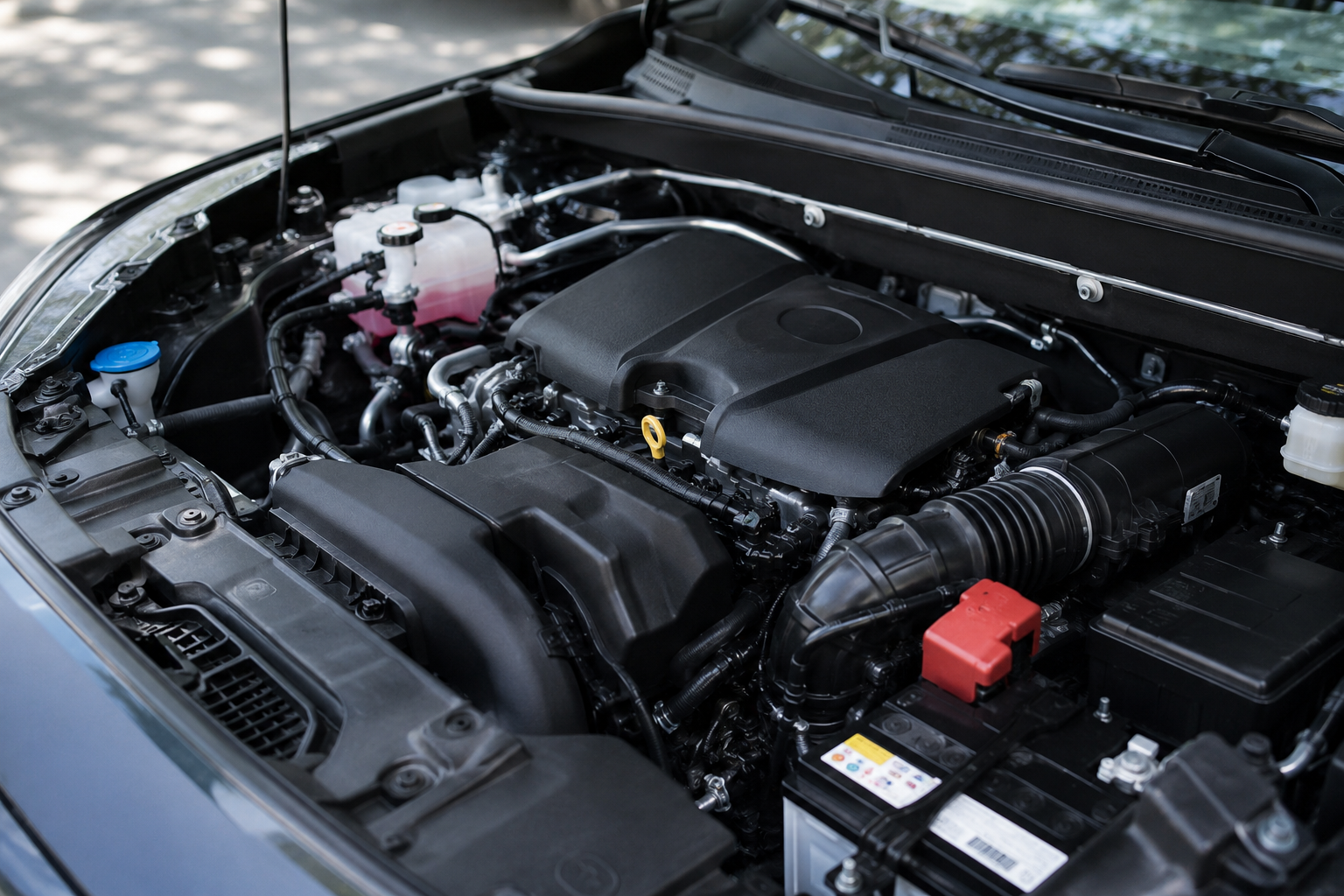
Tyres and Brakes
Check the tread depth on all four tyres, including the spare. The legal minimum is 1.6mm, but tyres with less than 3mm significantly affect wet-weather braking. A set of four tyres costs several hundred pounds, so uneven or near-minimum tread is a direct negotiating point.
Look for uneven tread wear across the width of a tyre. This usually indicates a wheel alignment or suspension problem. Worn inner or outer edges are a sign the car has spent time driving with incorrect geometry, which can mean worn suspension components.
Interior and Electrics
Check every switch, button, and control. Windows, mirrors, heated seats, air conditioning, and infotainment systems should all work. Turn on the ignition without starting the engine and check that all warning lights illuminate briefly and then go out. Any warning light that stays on after the engine starts needs an explanation.
Check the body of the seat bolsters, steering wheel, and pedal rubbers for wear relative to the claimed mileage. A car with 30,000 miles on the clock but heavily worn driver's seat bolsters and pedal rubber suggests the mileage has been altered.
The Test Drive
Ask to drive the car yourself, not just to sit in it while the seller drives. Most honest sellers will agree.
Start the car from cold if you can. Cold starts reveal a lot. Smoke from the exhaust on a cold start is less concerning than persistent smoke once the engine is warm. Blue smoke at any temperature suggests oil burning. White smoke after the engine warms up can indicate a head gasket issue.
Drive in stop-start traffic and at speed if possible. On the motorway or a dual carriageway, check the car holds its lane without pulling. Listen for any vibration or judder, especially under braking. On a quiet road, brake firmly once and feel for pulling to one side or a pulsing sensation through the pedal, both of which suggest brake issues.
Test the clutch on manual cars. The biting point should be consistent and not near the top of the pedal travel. A high biting point typically means the clutch is worn and may need replacing soon.
Check the gearbox shifts cleanly through all gears, including reverse. Reluctant gearchanges, crunching, or popping out of gear are all problems.
Paperwork to Check
The V5C logbook is the primary document. The name and address on it should match the seller's, and the registration, VIN, and engine number should all match the car. A private sale without a V5C is a serious red flag. It could mean the car is registered as SORN, has outstanding finance, or has been stolen.
Ask for the full service history. A stamped book from a dealer or evidence of online service records from a franchised dealer network both count. Missing stamps for certain mileage intervals are worth asking about specifically.
If the seller cannot produce an MOT certificate, you can confirm the car's MOT status on GOV.UK using just the registration number.
Negotiating and Paying
Before you make an offer, check the car's market value against listings on Autotrader or similar platforms. Search for the same make, model, trim, mileage bracket, and age, not the most optimistic examples. That gives you a realistic sense of whether the asking price is fair.
Any fault you find during the inspection or test drive is a legitimate reason to negotiate. A tyre that needs replacing, an advisory on the last MOT, or a minor bodywork scuff all have a price attached. You do not need to make it confrontational. Simply asking whether the price reflects the car's condition is usually enough.
Pay by bank transfer (BACS) for private sales, not cash, and never by wire transfer to an account outside the UK. Get a receipt that includes both parties' full names, the registration number, mileage, agreed price, and date. For dealer purchases, paying a portion on a credit card (even just £1 above £100) gives you Section 75 protection, which makes the credit card company jointly liable if something goes wrong.
Avoid paying a deposit before you have seen the car in person. Advance-fee scams targeting online buyers are increasingly common, particularly for attractively priced cars that the seller claims they can only deliver. If a deal requires you to pay before seeing the vehicle, treat it as a scam.
After You Buy
Once the sale is complete, transfer ownership by submitting the green slip of the V5C to the DVLA (if buying privately) or confirm the dealer has handled it. Set up insurance before you drive the car away. Road tax is no longer transferable between owners, so the previous owner's tax stops the moment they sell.
If you bought from a dealer and a fault emerges within 30 days, contact them in writing to start the rejection process. Keep records of everything. If the dealer refuses to engage, the Motor Ombudsman offers a free dispute resolution service for registered businesses.
The 2025 ombudsman data showed that the most common post-purchase complaint, after customer service, was engine or powertrain failure. That specific risk is best managed before purchase through model-specific research and a pre-purchase inspection. But if it does happen after purchase from a dealer, the law is on your side, provided you act quickly and document everything.




 Spidersnet